
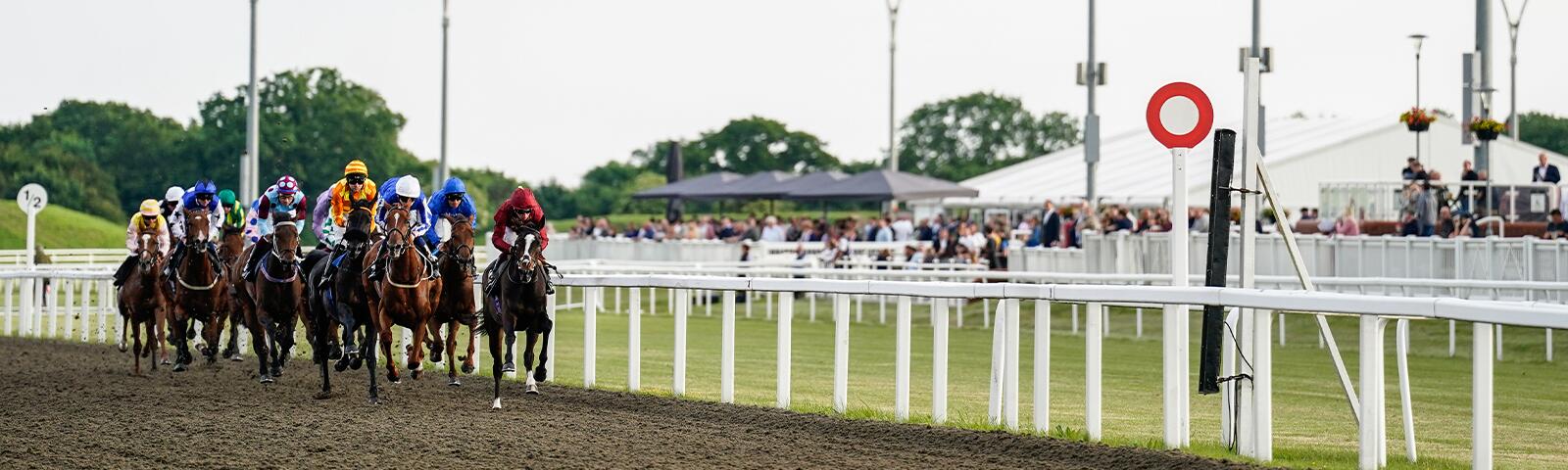
Horseracing is one of the world’s most popular sports attended by millions annually. There is a long history and so much to be enjoyed and learned along the way. Hopefully our guide provides a snippet and helps you in having a great day out at the races.
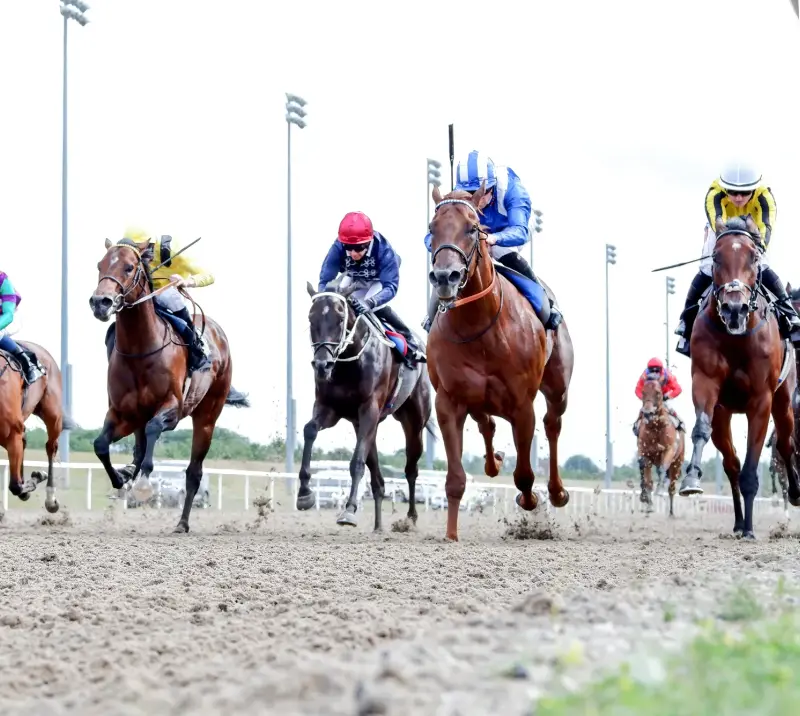
Horseracing is one of the oldest sports having existed for thousands of years, however, it is in the UK that it took much of its modern shape. As popularity grew, racecourses at Ascot, Newmarket, Doncaster and Epsom were established and eventually the formation of the Jockey Club which would introduce the modern rules and governance of British Racing, much of which has been exported globally. The oldest existing racecourse in the UK, Chester, dates back to 1539.
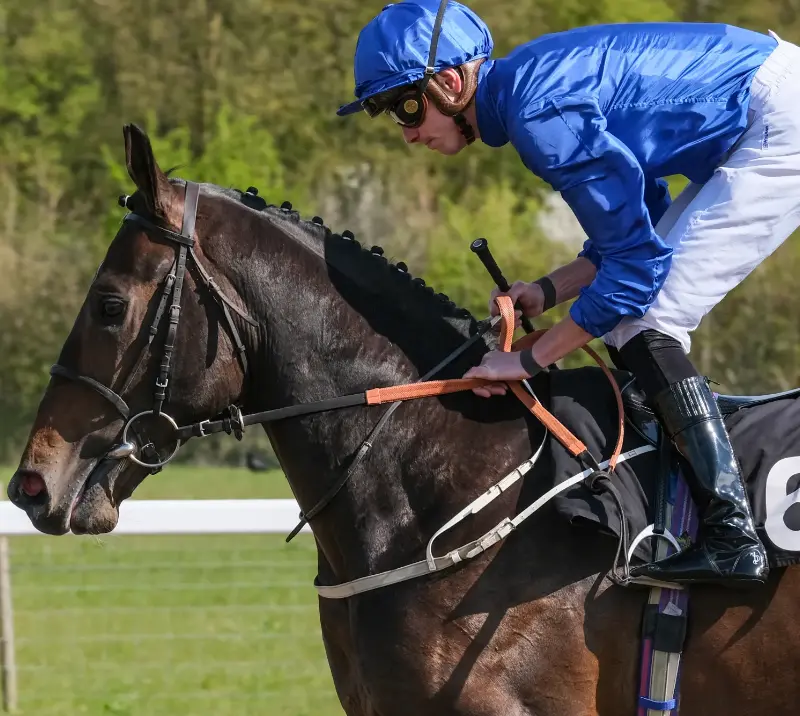
It is said that every Thoroughbred in racing today is a descendant of three stallions or ‘foundation sires’ known as the Byerley Turk, the Darley Arabian and the Godolphin Arabian.

Horseracing is a unique and popular day out that is open to everyone. This captivating sport makes a great day out with loads of fun to be had whether you’re here for racing, fashion, music or just having a good time with friends and family.
Gates usually open two hours before the first race with 30 minutes typically between races, so there’s plenty of time to visit one of our bars or food outlets to meet friends, see the horses in the Parade Ring and to experience the thrill of having a bet.
Glossary
Learn the lingo with our horseracing glossary and make yourself a racing aficionado.
Allowance – A weight concession that is given to apprentices, conditional and amateur riders to compensate for their lack of experience against more senior riders. This ‘allowance’ is usually 3lb, 5lb or 7lb, decreasing the more the rider wins
All-Weather – An artificial surface used at five racecourses in the UK (Chelmsford City, Kempton, Lingfield, Southwell, Wolverhampton). Types of artificial surfaces include Polytrack, Tapeta and Fibresand and are used all year round
Antepost – A bet well in advance of a race taking place where the price is usually bigger than you would expect
Apprentice – A trainee jockey who is given a weight allowance
At the post – When the horses have arrived at the start or stalls prior to a race
Bridle – The headgear used to control a horse
Bit – A piece of metal or material that fits in a horse’s mouth and aids in the communication between the horse and rider
Black type – A horse that has won or been placed in a Group or Listed races
Blinkers – Sidepieces attached to a horse’s hood to prevent looking sideways and look straight
Bookmaker/bookie – A person/company licensed to take bets
Breeder – Someone that breeds racehorses
Back – To bet on a horse
Banker – A horse that is almost certainly expected to win
Best turned out – The award for the horse judged to have been best presented in the paddock
Betting Ring – An area at a racecourse where you’ll find bookmakers
Colt – A male horse below five years of age (ungelded)
Conditions race – Races in which the weights carried by the runners are laid down by the conditions attached to the race. These are high quality races just below Group or Listed level
Conformation – A horse’s build or shape
Connections – People associated with a horse e.g. an owner or trainer
Course specialist – A horse that has a proven record at a racecourse from previous runs
Cheekpieces – Strips of sheepskin that are attached to the side of a horse’s bridle which help a horse to focus
Chute -Extension of racecourse which provides a straight start
Claimer – An apprentice flat jockey
Claiming race/claimer – A race where horse’s weight are determined by the price placed on them by connections
Classic (UK) – A group of historically important races for three-year-olds in the Flat season. The five Classics in the UK are the 2,000 Guineas, the 1,000 Guineas, the Oaks, the Derby and the St Leger
Clerk of the Course – Racecourse official responsible for the overall racecourse management
Draw – The stall a horse will begin their race from
Dam – A horse’s mother
Damsire – The sire of a broodmare (the maternal grandfather of a horse)
Dead-heat – A tie between two or more horses
Declared – A horse that is confirmed to start in a race
Fixture – A race meeting
Flat racing – Racing that does not have any jumps or obstacles
Foal – A horse from birth to January 1 of the following year
Form – A horse’s previous record in racing
Furlong – A unit of measurement for 220 yards or one eighth of a mile. Furlongs are marked by numbered posts on a racecourse
Favourite – The horse which is most expected to win and determined by having the shortest odds in a race
Filly – Female horse that are four-years-old or younger
Group race – The most prestigious ratings of races with Group 1 the most important, followed by Group 2 and Group 3
Guinea – A currency that was one pound and one shilling or £1.05 today
Gallop – Top speed for horses
Gallops – Training facility where horses are exercised
Gelding – A male horse that has been castrated
Going – The condition of the racing surface which ranges from heavy to firm on turf or slow to fast with All-Weather surfaces
Going down – When horses are on their way to the start
Green – When a horse shows inexperience
Handicap – A race where each horse carries different weight depending on their rating to make a race fair. This is determined by BHA Handicappers
Handicapper – BHA official who determines a handicap rating for a horse
Home straight – The final straight of a track to the finish line
Juvenile – A two-year-old horse
Joint-favourite – Two horses who share shortest odds in the betting, however this is referred to as co-favourites should there be three
Judge – Official responsible for declaring the finishing order of a race
Left-handed track – Racecourse where horses run against the rail on the left of the track or anti-clockwise
Length – A unit of measurement for the distances between each horse at the finish of a race from head to tail
Listed Race – A high-class race below a Group or Graded quality
Maiden – A horse that has yet to win a race
Mare – A female horse aged five years old or older
Middle distances – Races beyond a mile and up to 1m6f
Neck – Unit of measurement in a race finish about the length of a horse’s neck
Non Runner – A horse that was meant to run but has been withdrawn from the race
Nose – Unit of measurement in a race finish and the smallest official distance a horse can win by
Novice – A horse after it has won its first race
Novice stakes – A race for two-year-olds or three-year-olds that have not won more than twice
Nursery – A handicap for two-year-old horses
Nap – The best bet of the day from a tipster
National Hunt – Racing that features fences and hurdles
Odds/price – The chance of winning a bet
Off the bridle – When a horse is being pushed along
Off the pace – When a horse is behind the front-runners in a race
On the bridle – A horse running comfortable and not requiring to be pushed on
Paddock – Area of the racecourse where you will find the parade ring and winner’s enclosure
Parade Ring – Where horses are displayed prior to a race
Penalty – Additional weight carried by a horse due to previous wins
Photo finish – When the result of a race needs to be determined by the judge and the examination of a photograph taken on the finishing line
Rating – The way a horse’s quality is measured with the higher the number the better
Racecard – The programme for a fixture featuring runners, jockeys and other statistics and information for each race
Silks/colours – The jacket worn by jockey to identify a horse. Silks are designed and chosen by the owner of the horse
Sprinter – A horse that specialises in running over short distances such as five and six furlongs
Sprint race – Races that are run over five or six furlongs
Stallion – Male horses that are used for breeding
Stalls handler – Those who load horses into the stalls prior to a race
Starter – Racecourse official responsible for starting a horse race
Stayer – A horse that specialises in racing over longer distances such as two miles and above
Staying on – When a horse is finishing strongly in a race with possibility he could continue farther
Steward – Officials in responsible for a race meeting
Stewards’ Enquiry – A hearing held by the stewards to determine whether the rules have been broken during a race
Stewards’ room – A room on a racecourse where stewards are based
Stud – A farm where horses are mated
Selling plate/selling race – Race where the winner is offered at auction afterwards
Sire – Father of a horse
Soft – A condition of a racecourse where rain has left the ground ‘soft’
Thoroughbred – The breed of horse used for racing
Tongue tie – Material tied around a horse’s tongue and lower jaw to keep it from swallowing its tongue
Tote – Pool betting on racecourses where winnings are divided by the number of winners
Trainer – Someone who trains horses for racing
Trip – Distance of a race
Triple Crown (UK) – For colts the winning of three Classics; the 2,000 Guineas, the Derby and the St Leger or for fillies, the 1,000 Guineas, the Oaks and the St Leger
Turn of foot– A horse’s ability to accelerate in the closing stages of a race
Visor – Similar to blinkers, but with a slit to allow some vision at the sides
Weighed in – The official declaration confirming a race result
Weighing in – When a jockey is weighed before and after the race
Weights – Lead that is added to the jockey’s weight
Wind Operation – Surgical procedures that assist a horse with its breathing
Yard – A premises where a trainer trains their horses from
Yearling – A foal which is one years old from January 1 to December 31 of the year following its birth